Impact windows vs. hurricane shutters
Choosing impact windows vs. hurricane shutters comes down to cost, convenience, insurance, and how much everyday comfort you want — here is the honest, side-by-side breakdown for a Palm Beach County home.
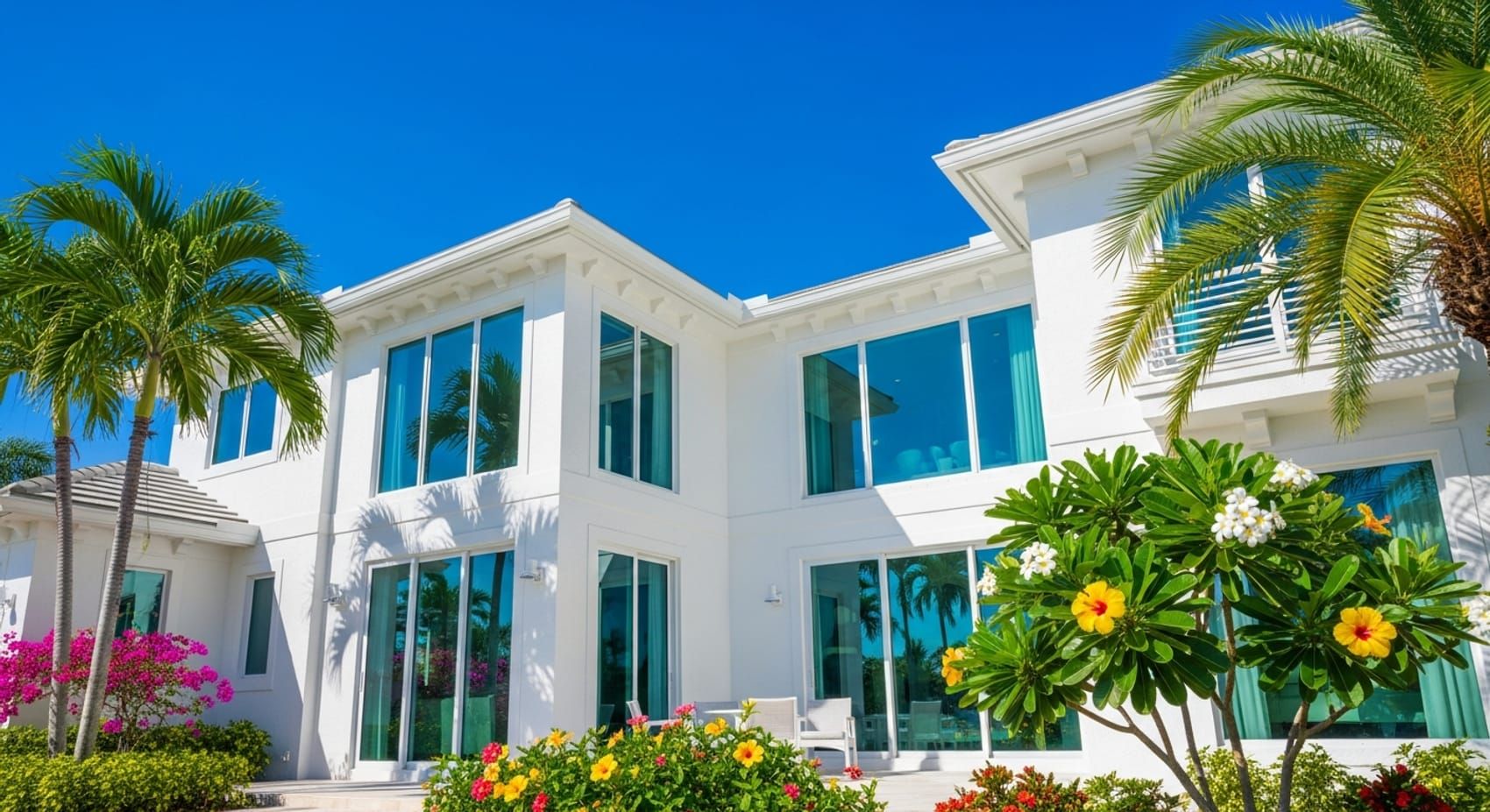
Two very different ways to protect the same window
Both approaches pass Florida code. They guard your home in completely different ways — and cost, convenience, and payback look nothing alike.
When Palm Beach County homeowners weigh impact windows vs. hurricane shutters, they’re really choosing between two philosophies of storm protection. Impact windows build the protection into the glass itself — a laminated, large-missile-rated unit that never comes down. Hurricane shutters leave your existing windows in place and add a separate barrier — panels, accordions, or roll-downs — that you deploy when a storm is on the way. Both can satisfy the Wind-Borne Debris Region rules that govern our county, so the right answer comes down to your budget, how long you plan to stay, and how much storm-day hassle you’re willing to trade for a lower sticker price.
Here’s a side-by-side breakdown across the things that actually matter: upfront cost, real-world protection, day-to-day convenience, insurance savings, resale value, and the everyday comfort you only notice once it’s gone. We install impact windows for a living, so we’ll be straight with you about where shutters genuinely win.
Impact windows vs. hurricane shutters, point by point
| What matters | Impact Windows | Hurricane Shutters |
|---|---|---|
| Upfront cost | Higher — it’s a full window replacement, glass and frame | Lower — added onto the windows you already have |
| Storm protection | Always on. Protects the glass and seals the opening 24/7 | Strong — but only once closed and deployed in time |
| Daily convenience | Nothing to deploy — set it and forget it | You must close or hang panels before every storm |
| Everyday benefits | Noise cut ~half, ~99% UV blocked, harder to break in | Little to none when open; can darken rooms when shut |
| Coverage timing | Year-round protection and comfort | Storm-only — no benefit the rest of the year |
| Insurance credit | Clean path to the wind-mitigation opening-protection credit | Approved shutters can earn it too — if every opening is covered |
| Home value & resale | Adds lasting value; buyers increasingly expect impact glass | Modest; stacks of panels can read as dated |
| Light & views | Clear glass — unobstructed views, all the time | Can block windows and darken the home when closed |
| Upkeep & storage | Minimal — clean like any window | Tracks and hardware need service; panels need storage |
What the table doesn’t fully capture
Upfront cost: shutters win — but it’s not the whole story
There’s no spinning it: hurricane shutters cost less to install because they bolt onto the windows you already own, while impact windows replace the entire unit. If your only goal is to meet code for the least money today, shutters are the cheaper line item. The catch is that the two purchases aren’t the same thing. With impact windows you’re also buying new, energy-efficient, better-sealed glass — so part of the cost is a window upgrade you’d eventually want anyway. Pricing for both swings widely with the number and size of openings, so we quote on-site rather than guess; our cost guide explains what drives the number.
Protection: it comes down to whether you’re there to deploy
On paper, an approved shutter and impact glass both stop wind-borne debris. In real life the difference is human. Shutters only protect once they’re closed, and storms in our area can intensify fast — if you’re traveling, out of town for the season, or simply out of time, the panels stay in the garage and the glass is exposed. Impact windows remove that variable entirely: the protection is permanent, so a sudden squall or an outer band at 2 a.m. is a non-event. Both also help keep the building envelope sealed, which limits the pressurization and water intrusion that do so much hurricane damage once a window fails.
The daily-life difference
This is where impact glass quietly pulls ahead. Because it’s laminated, it cuts outside noise by roughly half, filters out almost all the UV that fades floors, fabric, and art, and makes the home meaningfully harder to break into — every single day, not just during a storm. Shutters do none of that while they’re open, and when they’re closed for a multi-day event they can turn the house dark. If you live in the home year-round, those everyday wins are often what tips the decision.
Insurance and the wind-mitigation credit
Florida insurers reward opening protection, and here’s the part people miss: the credit is usually all-or-nothing. To earn it on the OIR-B1-1802 wind-mitigation inspection, every opening — windows, doors, the garage, any skylights — has to be protected to a rated level. Impact glass is the cleanest, most verifiable way to get there because it’s permanent. Approved shutters can qualify too, but a partial or mixed install often forfeits the discount. We hand you the documentation either way; the mechanics are on our insurance discounts page.
Want the numbers for your openings — glass, shutters, or a mix?
Get a Free EstimateWhen hurricane shutters still make the most sense
We’d rather you make the right call than the one that helps us most, and for some homes shutters are genuinely the better fit:
- A tight budget right now. If the choice is between unprotected windows and affordable code-compliant shutters, shutters are the responsible move — you can always upgrade to impact glass later.
- A seasonal or rarely-occupied property. For a place you can button up and leave, roll-downs or accordions you close on your way out can be a sensible, lower-cost answer.
- A few oversized or hard-to-replace openings. A historic window, an unusual shape, or a single huge span can be more practical to protect with a rated shutter while the rest of the home goes to impact glass.
- Phasing a larger project. Some homeowners shutter everything now and replace windows with impact units room by room — spreading the investment with help from financing.
The takeaway: shutters are a legitimate tool, not a consolation prize. They just ask something of you every storm season that impact glass never does.
Either way, the product has to be approved for our county
Palm Beach County is the Wind-Borne Debris Region (WBDR) — not the High-Velocity Hurricane Zone (HVHZ), which is Miami-Dade and Broward only. That governs which approvals are valid here, whether you choose glass or shutters, and out-of-county crews routinely get it wrong.
The bottom line for Palm Beach County homes
If you plan to stay in your home for years, impact windows usually win the long game: permanent protection with nothing to deploy, a quieter and more secure house every day, the cleanest path to the wind-mitigation insurance credit, and stronger resale appeal. Hurricane shutters earn their place when budget is the deciding factor today, on properties you don’t occupy full-time, or as a stopgap while you phase a fuller upgrade. Many of the best plans we build are a blend — impact glass or hurricane windows on the openings you live with, a rated shutter on the one or two that are tough to replace.
The honest next step is to price it against your actual openings. Skim the cost guide, check whether you qualify for the My Safe Florida Home grant, and then book a free estimate — we’ll lay out glass, shutters, and a phased mix side by side, with no pressure to pick the priciest one.
Impact windows vs. shutters: common questions
Are impact windows better than hurricane shutters?
Do hurricane shutters or impact windows lower insurance more?
Are hurricane shutters cheaper than impact windows?
Can I put impact windows on some openings and shutters on others?
Do hurricane shutters add home value like impact windows?
Not sure which way to go? Let’s walk your home.
A local estimator measures your openings and lays out impact glass, shutters, or a phased mix — with honest costs, insurance impact, and any grant savings. No pressure, no call center.